
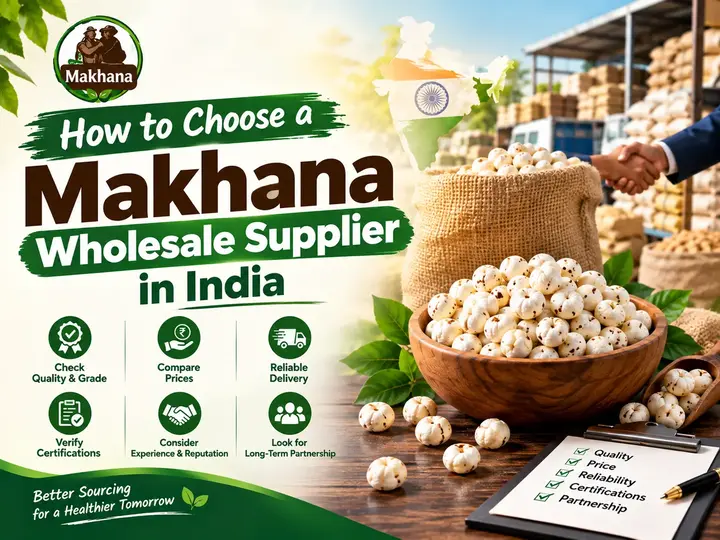
If you are planning to start or expand a makhana business, choosing the right makhana wholesale supplier is one of the most important decisions you will make. The supplier you select can directly affect your product quality, wholesale makhana price, margins, customer satisfaction, delivery timelines, and long-term business growth.
India has a strong ecosystem for makhana production and processing, with Bihar being particularly important to the makhana supply chain. However, finding a supplier is not simply about searching for the lowest price. A reliable B2B supplier should be able to provide consistent grades, appropriate packaging, required documentation, dependable quantities, transparent commercial terms, and repeat-order support.
Whether you are a retailer, food brand, distributor, wholesaler, restaurant, snack manufacturer, private-label business, or exporter, it is useful to evaluate a supplier systematically before placing a large order.
In this guide, we will explain how to choose a makhana wholesale supplier in India, what documents to check, how to evaluate makhana quality, what questions to ask before purchasing, and how to reduce risks associated with bulk makhana procurement.
What Should a B2B Buyer Check Before Choosing a Makhana Supplier?
Choosing a supplier should be treated as a procurement decision rather than simply a price comparison. Two suppliers may quote similar prices but offer very different product grades, packaging standards, processing capabilities, delivery reliability, and after-sales support.
Before finalising a makhana supplier for business, check the following areas.
- Business Registration and Supplier Identity
Start by verifying who you are actually buying from. Ask for the supplier’s legal business name, registered address, contact details, GST details where applicable, and other relevant business information.
A clearly identifiable business makes commercial communication, invoicing, payment verification, complaint resolution, and repeat procurement easier. - FSSAI Compliance
For food businesses, food safety documentation is an important part of supplier verification. FSSAI maintains regulations covering food-business licensing and registration, food packaging, labelling and other food-safety requirements.
Ask the supplier for the applicable FSSAI licence or registration details and verify that the information corresponds with the business supplying your product.
Do not treat a document merely as a formality. The supplier’s actual food-handling, processing, packaging and storage practices also matter. - GST Details
If your business requires GST-compliant purchasing, ask for the supplier’s GST details and ensure that invoices contain the information required for your business transactions.
Proper documentation is especially important for B2B buyers who maintain purchase records, calculate margins, manage accounting, or sell packaged products under their own brand.